Personal Finance Management Tips: Save Smart, Spend Smarter
Introduction
Personal finance management is one of the most important life skills every individual should develop. Whether you’re a student, a professional, or nearing retirement, understanding how to manage your finances can help you avoid debt, build savings, and achieve financial freedom. In this complete guide, we’ll walk you through effective budgeting, saving, investing, and money management strategies.
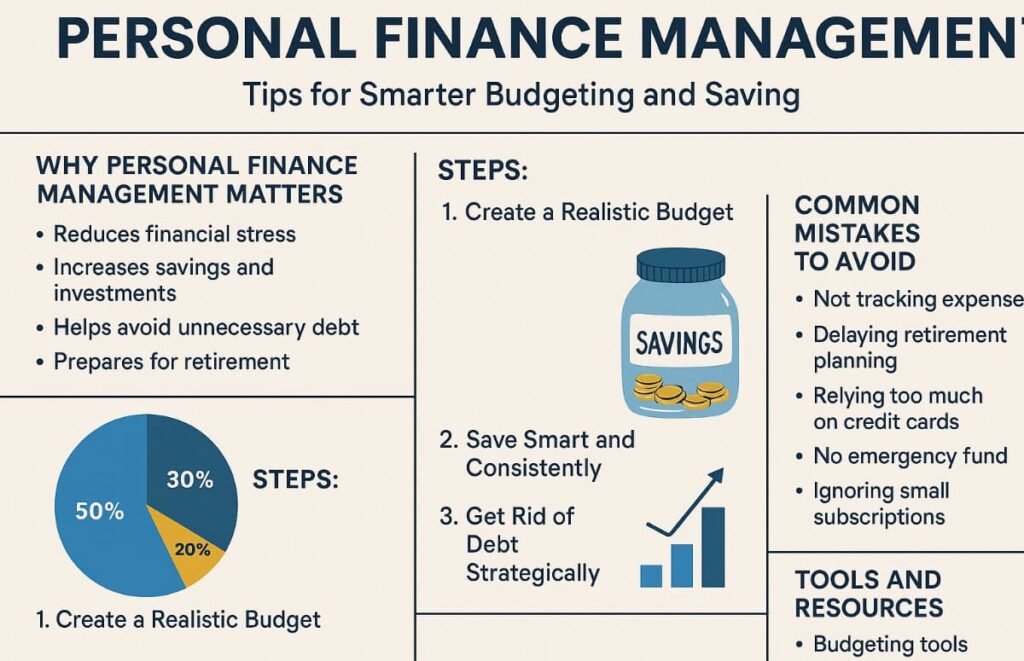
Why Personal Finance Management Matters
Without proper financial planning, many people struggle to cover their basic needs, fall into debt, or miss out on investment opportunities. Personal finance management gives you the control and visibility to make informed decisions. It helps you plan for emergencies, set financial goals, and stay on track.
Key Benefits:
Reduces financial stress
Increases savings and investments
Helps avoid unnecessary debt
Prepares you for retirement
Enables goal-based financial planning
Step 1: Create a Realistic Budget
A budget is a plan for your income and expenses. Without a budget, money often gets spent impulsively. Tools like Mint or You Need A Budget (YNAB) help you track spending in real time.
Budgeting Tips:
Calculate your net income
Categorize your expenses (fixed, variable, emergency)
Follow the 50/30/20 rule (needs/wants/savings)
Review and adjust monthly
Step 2: Save Smartly and Consistently
Savings are the backbone of financial security. They help you handle medical emergencies, job losses, and other unexpected events. Automating your savings ensures consistency.
Types of Savings:
Emergency Fund (3–6 months of expenses)
Short-term Goals (vacation, new gadget)
Long-term Goals (home, education, retirement)
Pro Tip: Use high-yield savings accounts to earn better interest.
Step 3: Get Rid of Debt Strategically
Debt is often the biggest obstacle to financial growth. Make a list of all your debts and tackle them using methods like:
Debt Snowball: Pay off the smallest debt first
Debt Avalanche: Pay off the highest interest rate first
Negotiate lower interest rates or consolidate loans
Step 4: Learn the Basics of Investing
Once you’ve saved and reduced your debt, it’s time to grow your money. Investing is an essential part of personal finance management. It helps you beat inflation and build wealth.
Investment Options:
Stocks & ETFs
Mutual Funds
Real Estate
Retirement Accounts (e.g., 401(k), IRA)
Step 5: Track, Analyze & Improve
Review your financial progress monthly. Are you meeting your savings targets? Is your spending aligned with your budget? Use spreadsheets or apps like PocketGuard to analyze and improve your financial habits.
Common Mistakes in Personal Finance Management
Avoid these pitfalls:
Not tracking daily expenses
Delaying retirement planning
Relying too much on credit cards
No emergency fund
Ignoring small subscriptions that add up
Tools and Resources You Can Use
Budgeting Tools: Mint, YNAB
Saving Apps: Digit, Chime
Investment Platforms: Robinhood, Vanguard, Fidelity
Financial Education: NerdWallet, Khan Academy Finance
Conclusion
Effective personal finance management doesn’t require a finance degree it only takes consistency, planning, and commitment. Whether you’re saving for a trip or planning for retirement, start small and stay focused. Your financial independence journey begins today.

One Comment