Cyber Bullying Paragraph for 6-12, SSC, HSC, 100-300 Words
Cyber Bullying Paragraph For All Classes Of Students
Introduction
Cyber bullying is a serious problem today. It means hurting someone online on purpose. This can happen through social media, mobile phones, or the internet. Because of this, every student needs to understand it clearly.
This guide gives you cyber bullying paragraphs in 100, 150, 200, 250, and 300 words. Each one suits a different class level. They are also helpful for exam preparation. So let’s start learning.
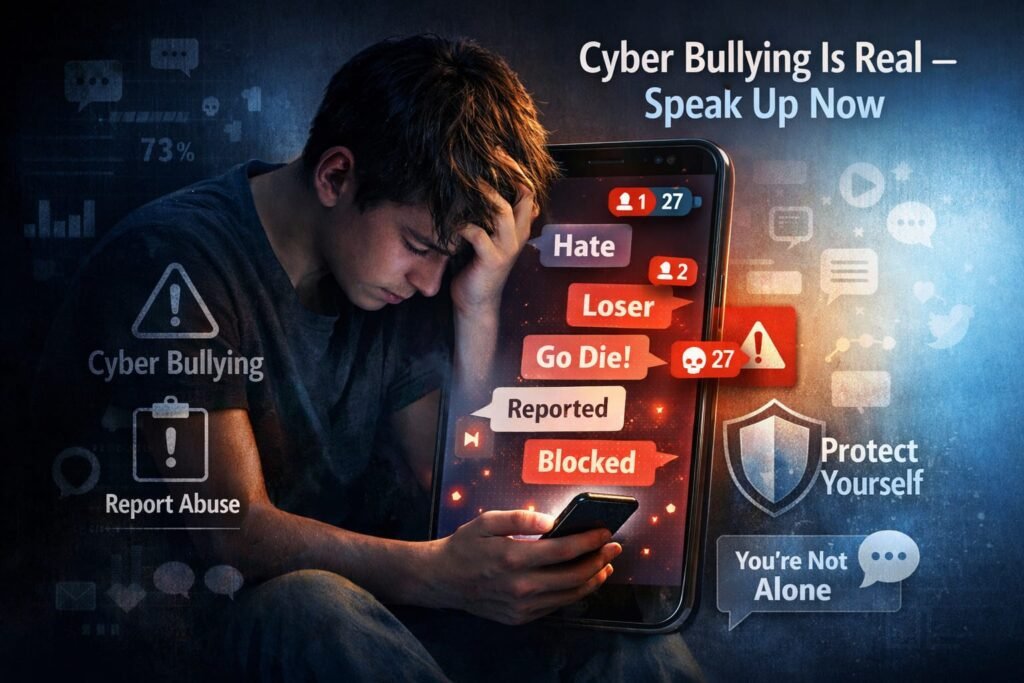
What is Cyber Bullying?
Cyber bullying means using the internet or a phone to hurt someone. The person does it on purpose. It can happen on social media, in games, or through messages. Unlike physical bullying, it can happen any time and anywhere.
Here are some common examples:
- Writing mean or hurtful comments about someone
- Telling lies or spreading false stories online
- Sharing someone’s private photo without permission
- Sending scary or threatening messages
- Repeatedly mocking someone online
Because of this, cyber bullying can cause harm that lasts a very long time. In fact, many victims struggle with its effects for months or even years.
Key point: Cyber bullying is intentional online abuse. It causes real and lasting emotional harm.
Read: Use and Abuse of Social Media Paragraph.
Cyber Bullying Paragraph – 100 Words (For Class 6–7)
Cyber bullying means hurting someone through the internet or social media. It is a serious and growing problem. Some people post mean comments on Facebook or Instagram. Others spread lies to damage someone’s reputation. As a result, victims feel scared, sad, and alone. Their mental health suffers badly. This kind of behavior is never acceptable. So every student must learn to use the internet kindly and safely. If you are bullied online, tell a parent or teacher right away. Do not stay silent. Together, we can make the internet a safe and friendly place for everyone.
Cyber Bullying Paragraph – 150 Words (For Class 8–9)
Cyber bullying is a big problem in today’s digital world. It happens when someone uses the internet or social media to hurt another person on purpose. This can include rude comments, threats, false rumors, or sharing private photos. As a result, victims feel sad, scared, and deeply stressed. Many lose confidence. Others stop going to school altogether.
However, we all have a role in stopping this. Students must be kind and careful online. If you see someone being bullied, speak up. If it happens to you, tell a trusted adult right away. Meanwhile, parents must talk to their children about online safety. Similarly, schools must teach students how to behave on the internet. With the right support and awareness, we can fight cyber bullying. Together, we can build a safer and kinder digital world for all.
Cyber Bullying Paragraph – 200 Words (For Class 9–10)
Cyber bullying is a modern form of abuse. It means using a phone, computer, or social media to hurt someone on purpose. As more people use the internet, this problem is growing fast. It can happen through social media, messaging apps, emails, or online games. Common forms include rude comments, threats, fake rumors, and sharing private images.
The effects are very harmful. Victims feel sad, anxious, and helpless. Over time, they lose confidence. They pull away from friends and family. Their school results get worse. In serious cases, some think about hurting themselves.
So everyone must play their part. Parents should talk to their children about what they do online. Similarly, schools must teach digital safety in class. At the same time, victims need proper care and support. Those who bully others must face clear consequences. Laws must also be applied firmly and fairly.
Awareness is the first step. Education is the second. And action is the third. If we take all three seriously, we can create a safe and positive online space. Nobody should feel afraid because of what someone does to them online. Everyone deserves to be treated with kindness and respect.
Cyber Bullying Paragraph – 250 Words (For Class 11–12)
Cyber bullying is one of the biggest problems young people face today. It happens through the internet, smartphones, and social media apps. Common forms include sending mean messages, making fake profiles, leaking private information, and shaming someone online. Apps like Facebook, Instagram, TikTok, and WhatsApp are often used for this kind of abuse. Because of this, harmful content can spread within minutes.
The effects on victims are severe. They feel depressed, anxious, and lose all self-confidence. Many become afraid to go to school. Others withdraw completely from social life. In the worst cases, some victims think about ending their lives. This clearly shows how dangerous cyber bullying can be.
However, stopping this problem needs action from everyone. At home, parents must talk openly with their children. They must also know what their children are doing online. At school, teachers must include lessons on digital safety and online kindness. Meanwhile, governments must pass strong laws and make sure they are enforced. Social media companies, too, must act quickly to remove harmful content.
Most importantly, we all need to build a culture of respect and empathy. Think before you type. Think before you share. Your words can cause real pain, even through a screen. So if everyone takes responsibility for how they act online, things will improve. We can look out for each other by reporting abuse and supporting victims. Step by step, we can build a digital world that is safe, kind, and fair for every person.
Cyber Bullying Paragraph – 300 Words (For University)
Cyber bullying is a serious and growing problem today. It is most common among teens and young people. It uses the internet, phones, or social media to hurt, shame, or scare others in many ways. These include rude comments, threatening messages, fake profiles, sharing private photos, spreading false rumors, and leaving someone out of online groups on purpose. Platforms like Facebook, Instagram, Twitter, Snapchat, and TikTok are often misused for this. Because of this, the problem is very hard to contain.
The effects of cyber bullying are long-lasting and serious. Victims develop real mental health problems. They feel depressed and anxious, lose self-worth, withdraw from friends and family, and struggle to sleep. Their school or college results drop sharply. In the most serious cases, some victims consider suicide. In fact, a 2023 study found that about 40 percent of young people in Bangladesh had faced some form of cyber bullying. That is a deeply alarming number.
However, preventing cyber bullying needs action at every level. At home, parents must speak openly with their children. They must also monitor online activity with care. At school, teachers must include digital literacy, online safety, and empathy as core subjects. Meanwhile, governments must enforce cyber crime laws firmly and consistently. Social media platforms must also act fast to identify and remove harmful content.
Above all, we need a society that truly values kindness and respect. Every person must pause and think about how their words affect others. Even a single message can cause lasting pain. So when we choose to be kind online, we inspire others to do the same. When we stand up against bullying, we protect those who cannot protect themselves. Together, we can build a digital world that is safe, inclusive, and welcoming for everyone.
Types of Cyber Bullying
Cyber bullying can take many different forms. Here are the most common ones:
1. Harassment: This means sending mean or offensive messages to someone again and again. The goal is to make them feel afraid or worthless.
2. Cyberstalking: This means following someone across platforms and using messages to scare or threaten them. It can go on for a long time.
3. Doxing: This means finding and sharing someone’s private information online. It is done without their knowledge or permission.
4. Trolling: This means posting rude or upsetting content on purpose. The goal is to provoke an angry reaction from others.
5. Exclusion: This happens when someone is left out of an online group or chat on purpose. It makes the victim feel rejected and unwanted.
6. Catfishing: This means using a fake identity online to trick or manipulate another person. It often leads to emotional harm.
7. Bullying by Proxy: This means getting other people to join in harassing someone. The victim often does not know who is behind it.
Key point: Every type of cyber bullying causes real harm. None of it should ever be ignored or excused.
Causes of Cyber Bullying
Understanding why cyber bullying happens is the first step toward stopping it. Here are the main causes:
- Hidden identity: Online, people can hide who they are. So some feel bold enough to be cruel in ways they never would in person.
- No face-to-face contact: Without seeing the person they hurt, many people feel far less guilty about their actions.
- Desire for power: Some bully others to feel popular or in control. It gives them a false sense of importance.
- Problems at home: Children who face neglect or abuse at home may take out that pain on others online.
- Negative emotions: Jealousy, anger, and the desire for revenge are common triggers for bullying behavior.
- Lack of awareness: Many people simply do not realize how badly their online actions can affect others.
Key point: Cyber bullying has many causes. All of them need to be understood before they can be properly addressed.
How to Prevent Cyber Bullying
Staying safe online is possible when you know the right steps. Here are simple and clear tips for everyone:
For Students:
- Never share personal details with strangers online
- Do not click on links that look suspicious or unsafe
- Use a strong password for every account
- Check your privacy settings on all apps regularly
- Take a screenshot right away if someone bullies you online
- Tell a trusted adult as soon as possible and do not stay silent
- Block and report anyone who is being harmful or abusive
Parents:
- Check in on what your child does online regularly
- Have open and calm conversations about internet safety
- Teach cyber safety early, before problems arise
- Watch for sudden changes in your child’s mood or behavior
- Seek professional help if your child shows signs of serious distress
For Schools:
- Create a clear and well-communicated anti-bullying policy
- Hold regular awareness sessions for students and staff
- Offer counseling and emotional support for affected students
- Set up a simple and private system for students to report bullying safely
Key point: Simple habits and open communication can go a long way in preventing cyber bullying.
Legal Aspects of Cyber Bullying in Bangladesh
Bangladesh has specific laws to deal with cyber bullying and online abuse. Knowing your rights is an important part of staying safe.
Main Laws:
- Digital Security Act 2018 – Sections 25 and 29
- ICT Act 2006 – Section 57
- Women and Children Repression Prevention Act 2000
Punishment: Those found guilty can face jail time or fines. The punishment depends on how serious the offense is.
What to do if you are a victim:
- Report it to the Police Cyber Crime Unit right away
- Call the National Helpline at 999 for immediate help and guidance
Key point: Cyber bullying is a crime in Bangladesh. Every victim has the right to report abuse and seek justice.
Conclusion
This guide has given you five complete cyber bullying paragraphs. They range from 100 to 300 words. Each one is written for a different class level.
Cyber bullying is a real and serious problem. But it can be stopped. It takes awareness, education, and people who care. Parents, teachers, and students all have a role to play. So if we all act with kindness and responsibility online, we can make the internet a safe place for everyone.
Practice these paragraphs and try writing your own. The more you understand this topic, the better you can protect yourself and support others.
FAQ
Cyberbullying is the intentional harassment, humiliation, or intimidation of a person through the internet, social media, or digital platforms. It includes spreading false information, sending threats, and sharing personal data without consent.
Avoid sharing personal information online, use strong passwords, ignore suspicious messages, and block or report the abuser. It is also important to inform a trusted person.
Common signs include depression, anxiety, social withdrawal, sleep problems, lack of focus in studies, low self-confidence, and fear of using digital devices.
Yes, cyberbullying is a punishable offense in Bangladesh. Legal action can be taken under the Digital Security Act 2018 and the ICT Act 2006.
Teenagers (ages 13–18) and young adults (ages 18–25) are the most affected. However, people of any age can become victims.
Traditional bullying happens face tCo face and is limited to a specific place. Cyberbullying can happen at any time and anywhere. It spreads quickly and leaves long-lasting digital records.
